
Erosion Control in Jacksonville, FL
Slope stabilization, bank repair, and shoreline protection for properties across Jacksonville and Duval County. Local team, own equipment, direct execution.
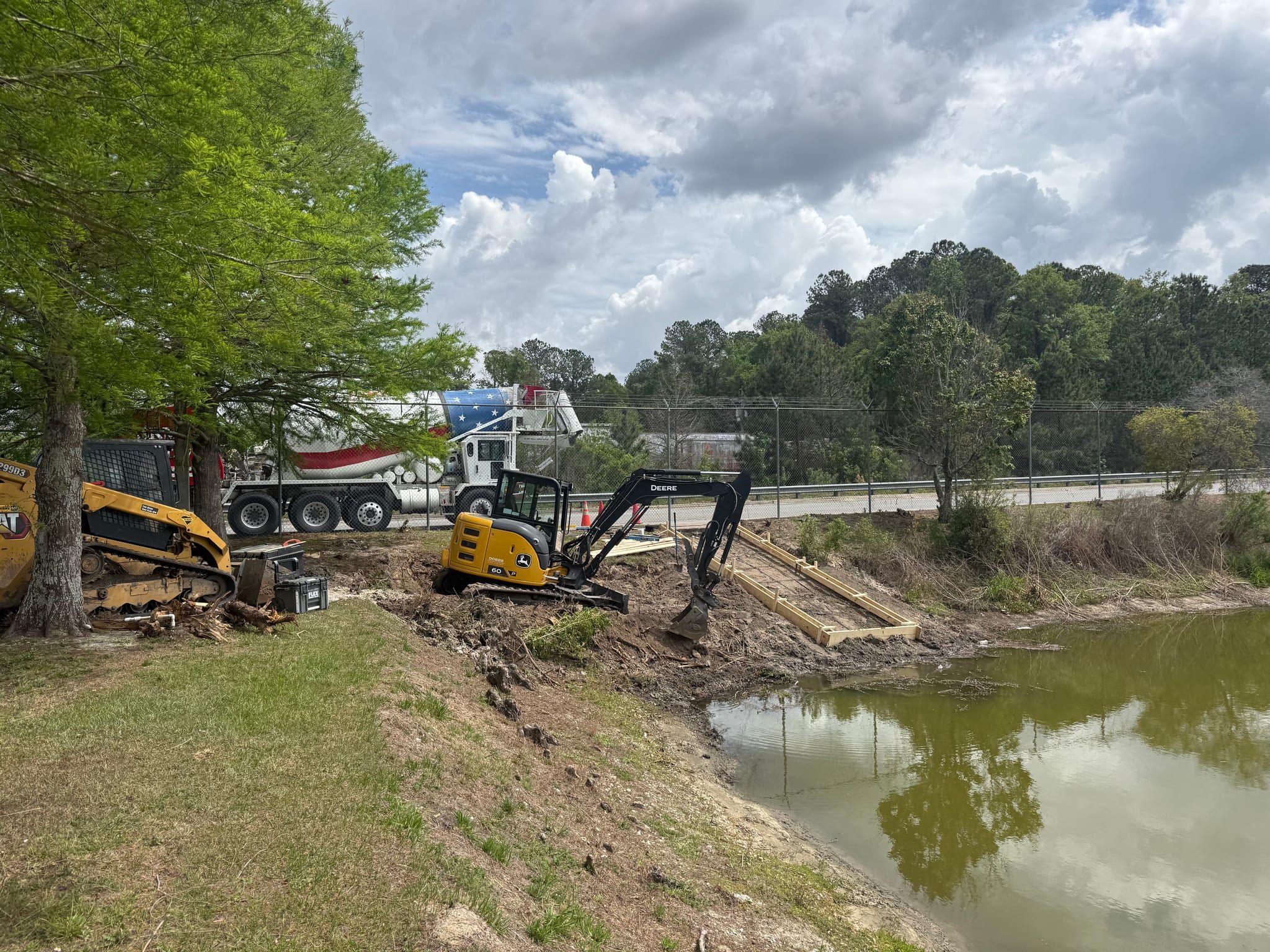
Jacksonville's sandy soils and dual-authority permitting make erosion control projects more complex than anywhere else in North Florida.
When you're dealing with erosion issues in Duval County, you're fighting against some challenging conditions. The area's sandy soils drain fast but don't hold slopes well, especially when you factor in Jacksonville's high water table. That's why you'll see pond banks slumping and drainage channels washing out after every heavy rain season.
The regulatory side gets tricky too. Both FDEP and the St. Johns River Water Management District want their say through Environmental Resource Permits, which means your erosion repair project needs to satisfy two sets of requirements. Add in Jacksonville's hurricane exposure, and you need solutions that can handle 6-inch-per-hour rainfall events without failing.
Most property managers find out about these challenges the hard way when they get a compliance notice or watch their retention pond turn into a muddy mess after a tropical storm. The sandy substrate that makes development easier also makes long-term erosion control harder if you don't use the right techniques.
What erosion control looks like in Jacksonville.
Bioengineered Shoreline Repair
Living shoreline installations using native plants and coir logs that work with Jacksonville's tidal influences. We design systems that handle both freshwater runoff and saltwater intrusion in coastal areas.
Sandy Soil Slope Stabilization
Specialized techniques for Duval County's sandy soils, including terracing, geotextile reinforcement, and deep-rooted native plantings that prevent washout during hurricane season.
Dual-Authority Compliant Design
Erosion control solutions that meet both FDEP and SJRWMD requirements from the start. We handle the permitting complexity so your project doesn't get delayed by regulatory issues.
Hurricane-Resistant Riprap Installation
Heavy-duty rock armoring designed for Jacksonville's extreme weather exposure. Our installations use properly graded stone and filter fabric to prevent undermining during major storm events.
We're based 45 minutes south in Bluffton, so we can mobilize equipment to Jacksonville projects the same day you call.
When your pond bank starts sliding or your drainage channel washes out, you need equipment on-site fast. We keep our excavators, rock trucks, and specialized erosion control gear in the coastal Carolinas, which puts us closer to Jacksonville than most Florida-based contractors. That means we can start repairs before the next rain event makes things worse.
We also understand the permitting dance between SJRWMD and FDEP because we work throughout this region regularly. Local knowledge matters when you're trying to get emergency repairs approved quickly.
Other services in Jacksonville.
AUE Land provides a full range of stormwater and site services across Jacksonville and Duval County.
Erosion Control across our service area.
Jacksonville stormwater quick reference.
| Item | Detail |
|---|---|
| County | Duval County |
| Soil Conditions | Sandy soils, shallow limestone, high water table |
| Key Challenge | SJRWMD dual-authority permitting, FDEP ERP requirements, hurricane vulnerability |
| Regulatory Info | Duval County regulations |
Frequently Asked Questions
Do I need permits for erosion control work in Jacksonville? expand_more
What type of plants work best for erosion control in Jacksonville's climate? expand_more
How long does riprap installation take for a typical pond bank repair? expand_more
Ready to fix your Jacksonville erosion problems before the next storm season?
We'll assess your site conditions and regulatory requirements at no cost. Our free assessment covers soil stability, drainage patterns, and permitting needs.
fact_check Site Health Audit
No obligation to hire AUE Land for any service work.