(843) 301-0172
Services

Pond Dredging Services

Restoring the storage capacity your stormwater ponds were designed to provide. Mechanical and hydraulic dredging, sediment removal, dewatering, and disposal - handled entirely by our crew and equipment.
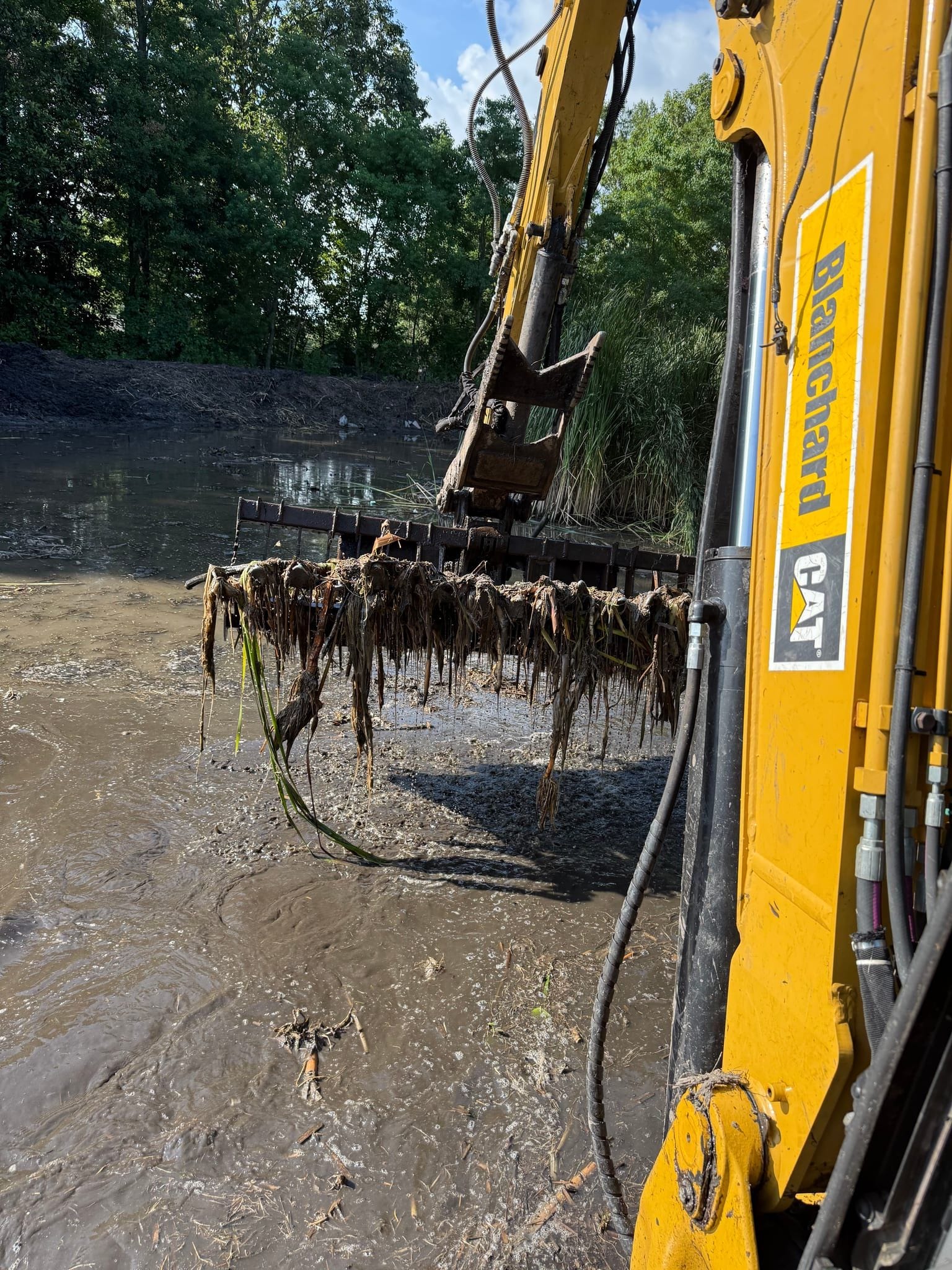
Pond dredging operation

Every stormwater pond is filling up. Yours included.

Stormwater ponds work by holding water and letting sediment settle out before discharge. That's by design. But it also means every pond is gradually losing capacity as that sediment accumulates year after year on the bottom.

A pond built 15-20 years ago may have lost 25-40% of its original storage volume to sedimentation. That's the difference between handling a heavy rain event and overtopping onto adjacent properties, roads, or downstream systems. It's also the difference between passing a compliance inspection and receiving a violation notice.

Across coastal South Carolina, Georgia, and the Southeast, thousands of stormwater ponds built during the development boom of the 2000s are now approaching their first required dredging cycle. Many property owners, HOA boards, and municipalities are seeing the signs for the first time: shallower water, more frequent algae blooms, sediment deltas forming at inlets, and reduced performance during storms.

Routine maintenance like vegetation management and outlet repair can extend a pond's effective life, but it can't prevent sediment accumulation. At some point, the sediment has to come out. The question isn't whether your pond will need dredging. It's whether you plan for it or wait until it becomes an emergency.

Two dredging methods. The right one depends on your pond.

Not every pond calls for the same approach. We evaluate your site conditions and recommend the method that delivers the best result for your budget and timeline.

Mechanical Dredging

Mechanical dredging uses excavators and heavy equipment to physically remove sediment from the pond bottom. The material is loaded into trucks and hauled to a disposal or beneficial reuse site. It's a straightforward, proven method that works especially well in certain conditions.

Best suited for

  • Smaller ponds where equipment can access the entire bottom
  • Rocky, sandy, or debris-heavy sediment that doesn't pump well
  • Sites with good road access for truck loading
  • Ponds that can be partially or fully dewatered
  • Projects that also require bank repair or outlet work

Hydraulic Dredging

Hydraulic dredging uses a pump-based system to suction sediment from the pond bottom as a water-sediment slurry. The slurry is piped to a designated dewatering area on-site, where the sediment settles out and water is returned to the pond or discharged. It's faster per cubic yard and requires far less truck traffic.

Best suited for

  • Larger ponds with significant sediment volume
  • Fine silt and organic sediment that pumps efficiently
  • Sites where truck traffic needs to be minimized (HOAs, golf courses)
  • Ponds that need to remain full during dredging
  • Properties with available space for on-site dewatering

We recommend the method. Not the one that's easier for us.

Most dredging contractors specialize in one method and recommend it for every job regardless of site conditions. That means you're either paying for truck traffic you don't need, or trying to pump material that doesn't pump well.

AUE Land evaluates each pond on its own terms: sediment type, volume, access conditions, disposal options, budget, and timeline. Then we recommend the approach that delivers the best result for your specific situation. Sometimes that's mechanical. Sometimes that's hydraulic. Sometimes it's a combination where we pump the bulk sediment and mechanically remove compacted material near inlets and structures.

The result is a cleaner pond, a more accurate budget, and less disruption to your property.

How a dredging project works.

1

Survey & Assessment

A bathymetric survey maps the pond bottom and measures sediment depth at multiple points. This tells us exactly how much material needs to come out, where it's concentrated, and what method will work best. No guesswork, no surprises.

2

Permitting & Planning

We can work with you on the permitting process with SCDHEC, GA EPD, the Army Corps, or local authorities as required. We also plan the logistics: equipment staging, sediment disposal or reuse, dewatering locations, traffic management, and schedule.

3

Dredging & Removal

Our crew mobilizes equipment and removes sediment using the method best suited to your pond. We monitor progress against the survey data to ensure we're hitting target depths and restoring the designed storage volume. Sediment is either hauled off-site or dewatered and stockpiled for beneficial reuse.

4

Restoration & Documentation

After dredging, we restore any disturbed banks, inlets, or access areas. A post-dredge survey confirms the pond has been restored to design capacity. You receive full documentation including before/after surveys, sediment volumes, disposal records, and compliance reports formatted for your municipality.

Types of ponds and waterbodies we dredge.

Stormwater Retention Ponds

The most common dredging need in our service area. HOA and commercial retention ponds accumulate sediment over 15-25 years until storage capacity is compromised. We restore ponds to their original design volume and address any bank erosion or structural issues discovered during the process.

Detention Basins

Dry detention basins that have accumulated sediment on the basin floor, reducing their ability to store and slowly release stormwater. Sediment buildup in detention basins can also clog low-flow orifices and alter the designed release rate.

Golf Course Ponds

Golf course ponds serve both aesthetic and stormwater functions. Dredging restores water depth, reduces algae, and improves appearance while maintaining the pond's stormwater compliance function. We schedule around course operations to minimize disruption to play.

Community Lakes

Larger community lakes and water features that have lost depth and clarity due to decades of sediment accumulation. Property values around these features are directly tied to water quality and appearance. Dredging restores both.

Municipal Stormwater Facilities

Public stormwater ponds, regional detention facilities, and municipal drainage impoundments that require periodic dredging to maintain flood control capacity. We work with municipal procurement processes and provide the documentation public agencies require.

Constructed Wetlands

Constructed wetland BMPs that have accumulated sediment in forebays or treatment cells. Dredging restores flow paths and treatment capacity while preserving established wetland vegetation. These projects require careful phasing to minimize ecological disruption.

What drives dredging costs.

Dredging is one of the largest capital maintenance expenses a property will face for its stormwater systems. Understanding what drives the cost helps you plan and budget effectively.

Sediment volume

The single biggest cost driver. A bathymetric survey eliminates guesswork by measuring exact volumes. Without a survey, you're estimating, and estimates on dredging projects are frequently off by 30-50%.

Disposal and hauling distance

Where the sediment goes after removal is often the hidden cost driver. If clean sediment can be beneficially reused on-site or nearby, disposal costs are minimal. If it needs to be trucked 30+ miles to a disposal facility, hauling can represent 30-40% of the total project cost.

Access and mobilization

Ponds with good road access and staging area are significantly less expensive to dredge than ponds surrounded by homes, fences, or landscaping that restrict equipment access. Mobilization costs are also affected by distance from our Bluffton base.

Sediment type

Fine silt pumps easily and dewaters quickly. Heavy clay, organic muck, or sediment with debris requires more handling. Contaminated sediment (rare in residential stormwater ponds but possible in commercial or industrial sites) adds testing and specialized disposal costs.

Dewatering requirements

Hydraulic dredging produces a slurry that needs to be dewatered before disposal or reuse. If space is available on-site for geotextile dewatering tubes or settling basins, costs stay lower. If dewatering must happen off-site, it adds transportation and handling expense.

Who needs pond dredging services?

HOA Boards & Property Managers

If your community's ponds are 15+ years old and have never been dredged, they're likely approaching or past the point where sediment is reducing capacity below acceptable levels. Dredging is a major capital expense that boards need to plan and budget for, ideally 2-3 years in advance. We provide the survey data and cost estimates your board needs to make that decision.

Golf Course Superintendents

Shallow, silted-in ponds affect both course aesthetics and stormwater compliance. Dredging restores water depth, reduces nutrient-driven algae problems, and improves the visual quality of water features that members and guests see every round. We schedule around course operations and minimize disruption to play.

Municipal Stormwater Departments

Public stormwater facilities require periodic dredging to maintain flood control capacity. Deferred maintenance on municipal ponds creates downstream flood risk and NPDES compliance issues. We work within municipal procurement processes and provide the documentation and reporting public agencies require.

Lake Community Associations

Property values around community lakes are directly tied to water quality and depth. When lakes become shallow and murky from decades of sedimentation, homeowner satisfaction and property values decline. Dredging is the only way to restore depth, improve water clarity, and extend the life of these community assets.

Commercial Property Owners

Commercial retention ponds that aren't meeting compliance requirements due to lost capacity. Dredging restores the designed storage volume and brings the property back into compliance with local stormwater permits.

Pond dredging services by location.

We provide pond dredging services across coastal South Carolina, Georgia, and the Southeast.

Frequently Asked Questions

How do I know if my pond needs dredging? expand_more
The clearest indicators are reduced water depth, visible sediment buildup around inlets, frequent algae blooms, standing water in areas that used to drain, and water overtopping during storms that the pond previously handled. A bathymetric survey provides exact sediment depth measurements across the entire pond and tells you precisely how much capacity has been lost. AUE Land recommends surveys every 3-5 years for proactive planning.
What is the difference between mechanical and hydraulic dredging? expand_more
Mechanical dredging uses excavators to physically scoop sediment from the pond bottom and load it into trucks for disposal. It works well for smaller ponds, rocky or debris-heavy material, and sites with good equipment access. Hydraulic dredging uses a pump-based system to suction sediment as a slurry and pipe it to a dewatering area on-site. It's faster for larger ponds with fine silt, requires less truck traffic, and causes less disruption to surrounding areas. The right method depends on pond size, sediment type, access conditions, and disposal options.
How much does pond dredging cost? expand_more
Dredging costs vary significantly based on pond size, sediment volume, sediment type, access conditions, disposal distance, and whether dewatering is required on-site. For stormwater retention ponds, costs typically range from $10-$30 per cubic yard for larger projects to $30-$60+ per cubic yard for smaller ponds or difficult access situations. A bathymetric survey ($2,000-$5,000 depending on pond size) is the best investment before dredging because it eliminates guesswork on sediment volume and prevents budget surprises.
Does dredging require permits? expand_more
In most cases, yes. Dredging in South Carolina typically requires coordination with SCDHEC and may require a Section 404 permit from the Army Corps of Engineers depending on the waterbody classification. Georgia projects require coordination with GA EPD. AUE Land handles the permitting process as part of the project, including sediment disposal documentation and any required environmental compliance reporting.
How often does a stormwater pond need to be dredged? expand_more
Most stormwater ponds need dredging every 15-25 years, depending on the upstream land use and sediment load. Ponds in areas with active construction, heavy traffic, or exposed soils accumulate sediment faster. Regular maintenance like inlet cleaning and erosion control on contributing drainage areas can extend the interval between dredging events. The key is monitoring sediment levels through periodic surveys rather than waiting until the pond visibly fails.
What happens to the sediment after dredging? expand_more
Sediment from stormwater ponds is typically clean fill that can be beneficially reused for grading, fill material, or land application, which reduces disposal costs. If environmental testing indicates contamination (uncommon for residential stormwater ponds but possible for commercial or industrial sites), sediment must be disposed of at an approved facility. AUE Land handles sediment testing, transportation, and disposal or beneficial reuse as part of the project scope.

Ready for a site that thrives?

A bathymetric survey tells you exactly how much capacity your pond has lost and what it will cost to restore. It's the smartest investment you can make before committing to a dredging project. Call us to schedule.

fact_check Site Health Audit

check_circle Structural BMP Integrity Scan
check_circle Soil Erosion Risk Analysis
check_circle Regulatory Compliance Status
check_circle Written Findings & Recommendations

No obligation to hire AUE Land for any service work.