
Erosion Control & Stabilization Services
Shoreline repair, slope stabilization, bioengineered stabilization, riprap installation, native plantings, and pond bank restoration. We stop erosion at the source and repair the damage it's already caused.
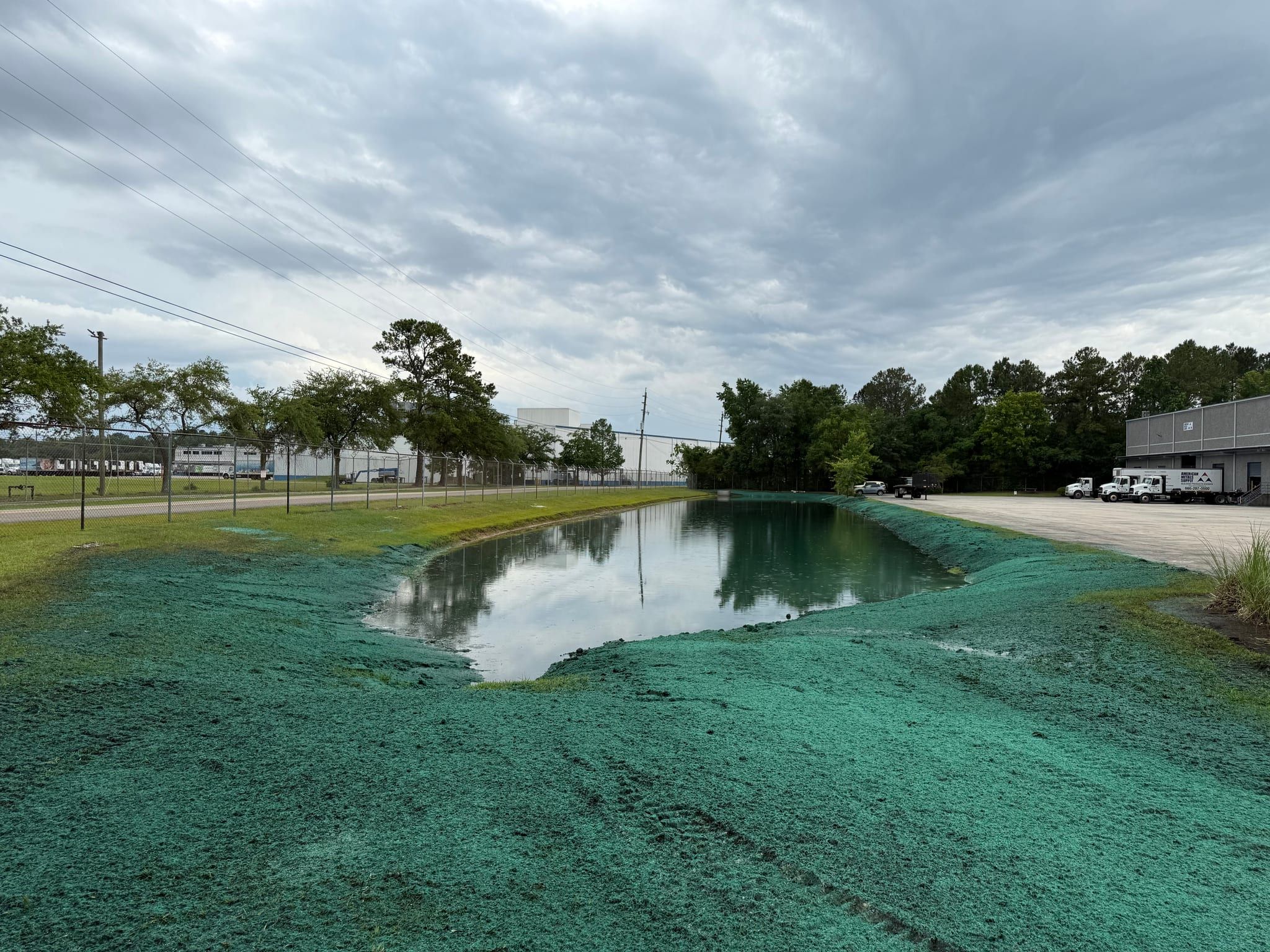
Erosion doesn't stop on its own. It accelerates.
Erosion is the most visible sign that a stormwater system or landscape is failing. A small area of exposed soil on a pond bank becomes a widening scar. A minor channel cut by concentrated runoff becomes a deep gully. A shoreline that loses six inches one year loses two feet the next.
In coastal South Carolina and Georgia, erosion is especially aggressive. The Lowcountry's sandy soils have almost no natural cohesion. Once protective vegetation or root systems are disturbed, soil washes away with every rain event. High water tables saturate slopes from below, reducing stability. Tidal influence in coastal areas creates constant water level fluctuation that undercuts banks. And the region's intense summer storms deliver heavy rainfall in short bursts that overwhelm unprotected surfaces.
The consequences are real and expensive. Eroding pond banks can undermine adjacent sidewalks, cart paths, roads, and property boundaries. Slope failures can block drainage pathways and create flooding. Sediment from erosion fills stormwater ponds and clogs drainage infrastructure downstream. And municipalities treat uncontrolled erosion as a compliance issue because the sediment it generates is a pollutant under the Clean Water Act.
Every month you wait, the scope and cost of the repair grows. What starts as a vegetation management issue becomes a regrading project. What starts as a regrading project becomes structural stabilization with riprap and engineered solutions.
Erosion control methods we use.
Riprap Installation & Repair
Riprap, or carefully placed stone armoring, is the most durable solution for high-energy erosion areas. We install new riprap on eroding pond banks, outfall discharge areas, drainage channels, and shorelines. We also repair and supplement existing riprap that has shifted, settled, or been undermined. Proper riprap installation requires the right stone size, filter fabric underlayment, and slope preparation. These details determine whether the installation lasts five years or fifty.
Bioengineered Stabilization
For areas where hard armoring isn't appropriate or desired, we use bioengineered techniques that combine living plant material with structural elements. Coir fiber logs along the waterline break wave energy while native plantings establish root systems that hold soil in place. Live stakes driven into slopes create a living reinforcement network. These systems look natural, provide habitat value, and become stronger over time as plants mature.
Native Shoreline Plantings
The right plants in the right locations are the most cost-effective long-term erosion prevention. We install native grasses, sedges, and shrubs that are adapted to the Lowcountry's wet conditions and provide the deep root systems needed to stabilize pond banks, swales, and slopes. Native plantings also reduce mowing requirements, filter nutrients, and satisfy the littoral shelf planting requirements that many municipalities mandate.
Pond Bank Restoration
When pond banks have eroded significantly, restoration requires more than surface treatment. We regrade banks to a stable slope, install geotextile reinforcement where needed, armor the waterline with riprap or bioengineered materials, and establish vegetation on the upper bank. The goal is a stable bank profile that resists future erosion from wave action, stormwater inflow, and water level fluctuation.
Slope Stabilization
Slopes along roads, cart paths, drainage channels, and between grade changes are prone to erosion, especially when stormwater flows across or down them. We stabilize slopes by correcting drainage patterns that concentrate flow, regrading to a stable angle, installing erosion control blankets or turf reinforcement mats, and establishing deep-rooted vegetation. Where structural reinforcement is needed, we install retaining solutions and armoring.
Outfall & Discharge Area Repair
Where stormwater pipes discharge into ponds, streams, or drainage channels, the concentrated flow creates high-energy erosion conditions. Outfall areas frequently develop scour holes, undercut pipe ends, and bank erosion downstream. We repair outfall erosion with energy dissipation structures, riprap aprons, headwall repair or replacement, and channel stabilization that prevents the same damage from recurring.
We fix the cause, not just the symptom.
Erosion is always a symptom of something else: concentrated water flow, improper grading, removed vegetation, wave action, or soil conditions that can't support the current slope. If you repair the erosion without addressing the cause, it comes back.
Every erosion control project starts with understanding why the erosion is happening. Is stormwater from a parking lot discharging directly onto an unprotected slope? Is the pond bank too steep for the sandy soil? Is the landscape crew mowing turf grass all the way to the waterline, preventing native root systems from establishing? Is an upstream drainage change sending more water to this location than the original design anticipated?
Once we understand the cause, we design a repair that addresses both the damage and the underlying condition. That might mean redirecting a stormwater inlet, regrading a slope to a stable angle before armoring it, installing a level spreader to diffuse concentrated flow, or establishing a no-mow buffer zone with native vegetation.
This approach costs less in the long run because the repair lasts. Properties that treat erosion as a cosmetic issue (filling in washouts, spreading seed on bare banks) end up paying for the same repairs repeatedly. Properties that address the root cause fix it once.
Who needs erosion control services?
HOAs with Eroding Pond Banks
Pond bank erosion is the most common stormwater maintenance issue in Lowcountry communities. When banks erode, they threaten adjacent infrastructure, reduce pond capacity, and create compliance issues. We restore pond banks with solutions that match the community's budget and aesthetic expectations.
Golf Course Superintendents
Cart path erosion, fairway edge washouts, bunker drainage failures, and pond bank deterioration are daily challenges on Lowcountry courses. We work around course operations, scheduling heavy equipment work during low-play periods and minimizing turf damage during repairs.
Commercial Property Managers
Erosion on commercial properties creates liability, damages infrastructure, and can result in compliance violations. We repair slope erosion along parking areas, stabilize drainage channels, and restore detention basin banks that have deteriorated.
Developers Closing Out Projects
Erosion control is frequently the last item holding up project close-out. Whether it's stabilizing construction-phase disturbance or establishing permanent vegetation on BMP slopes, we complete the work that satisfies SCDHEC and local inspection requirements.
Erosion control services by location.
We provide erosion control and stabilization services across coastal South Carolina and Georgia.
Frequently Asked Questions
What causes erosion around stormwater ponds? expand_more
What is bioengineered stabilization? expand_more
How long does erosion repair take? expand_more
Is riprap the only option for pond bank erosion? expand_more
Does AUE Land handle erosion on slopes that aren't near ponds? expand_more
Erosion won't wait. Neither should you.
Request a site assessment. We'll evaluate the erosion on your property, identify the cause, and give you a clear repair plan with a firm price. No obligation to hire AUE Land for any service work.
fact_check Site Health Audit
No obligation to hire AUE Land for any service work.