
Stormwater Management & BMP Maintenance
Inspection, maintenance, and repair of retention ponds, detention basins, bioretention systems, sand filters, and underground stormwater facilities. Our crew, our equipment, from assessment through completion.
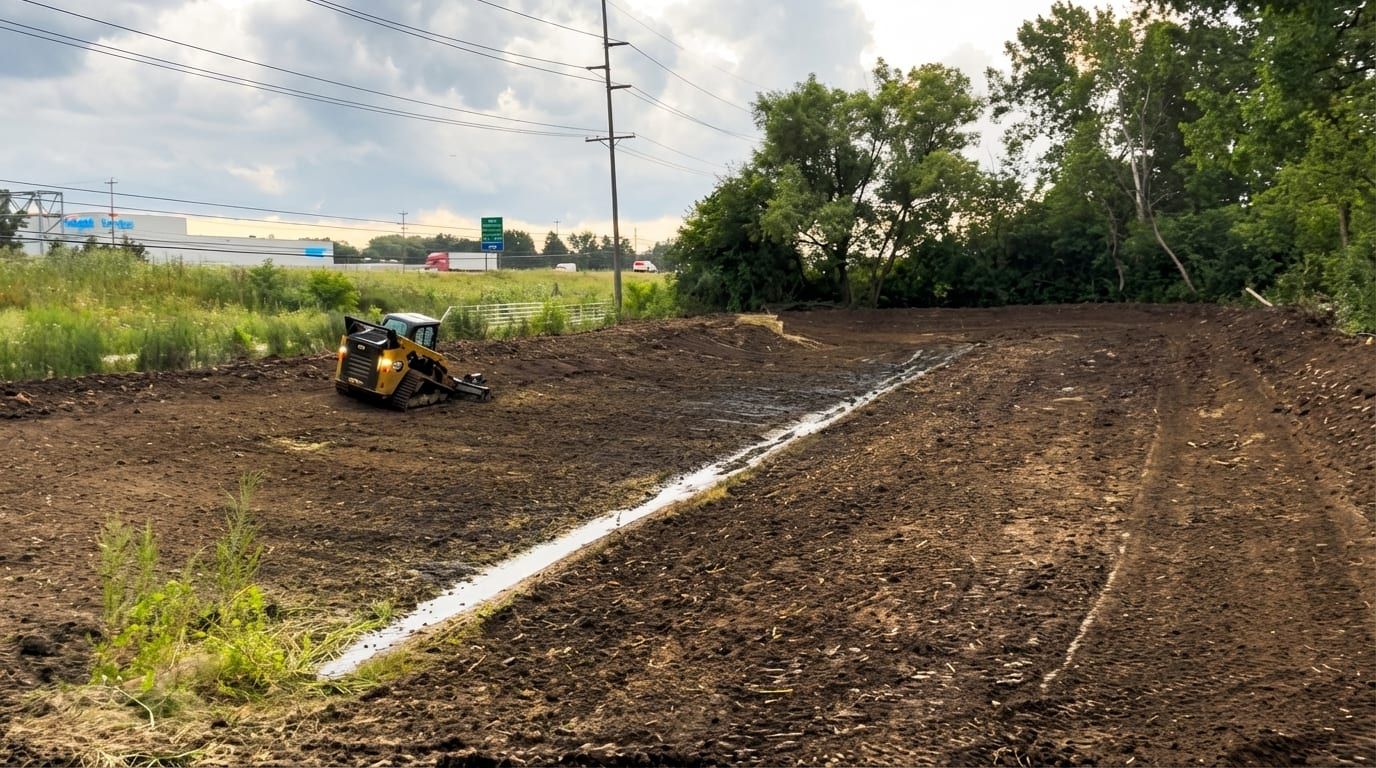
Every stormwater system degrades. The question is whether you manage it or it manages you.
Retention ponds fill with sediment. Detention basins lose storage capacity. Bioretention media becomes clogged. Outlet structures corrode, crack, and fail. Pond banks erode until they undermine roads, sidewalks, and property boundaries. Underground systems collect debris and sediment until flow is restricted and water backs up where it shouldn't.
These aren't possibilities. They're certainties. Every engineered stormwater system requires ongoing maintenance to function as designed. In coastal South Carolina and Georgia, the combination of sandy soils, high water tables, heavy seasonal rainfall, and warm-climate vegetation growth accelerates the timeline.
Properties that defer maintenance don't save money. They accumulate liability. A pond that should have received routine sediment management becomes a major dredging project. An outlet structure that needed a minor repair becomes a complete replacement. A bank that needed vegetation management becomes a slope failure that threatens adjacent infrastructure.
The municipalities know this too. SCDHEC, GA EPD, and local stormwater departments are increasing enforcement of BMP maintenance requirements. Properties with no maintenance history are the first to receive violation notices.
Stormwater systems we inspect, maintain, and repair.
Retention Ponds (Wet Ponds)
The most common BMP in the Lowcountry. Retention ponds hold a permanent pool of water and treat stormwater through settling and biological processes. Maintenance includes sediment monitoring and removal, bank stabilization, vegetation management, outlet structure inspection, and littoral shelf planting. When neglected, retention ponds lose storage capacity, develop erosion problems, and fail to meet discharge quality standards.
Detention Basins (Dry Ponds)
Designed to temporarily store runoff and release it at a controlled rate, detention basins should be dry between storm events. Maintenance includes sediment removal, mowing and vegetation control, inlet and outlet cleaning, structural inspection of riser pipes and weir structures, and regrading of the basin floor when settling creates low spots that hold standing water.
Bioretention Areas & Rain Gardens
Bioretention systems filter stormwater through engineered soil media and plants. They require careful vegetation management to maintain the right plant species and density, periodic media replacement when infiltration rates drop, inlet and overflow inspection, and mulch replenishment. These systems can be highly effective when maintained, but they decline quickly when neglected.
Sand Filters
Sand filters treat stormwater by passing it through a sand bed that captures sediment and pollutants. They require regular inspection of flow rates, periodic sand replacement when filtration rates decline, cleaning of underdrains and collection systems, and structural maintenance of the filter chamber. Sand filters that aren't maintained can bypass entirely, providing no treatment.
Underground Detention & Infiltration
Underground systems, including chambers, vaults, and pipe arrays are common in commercial and high-density developments where surface area is limited. Maintenance requires specialized access, often including confined space entry, hydro-vac cleaning, and CCTV inspection. Sediment accumulation in underground systems is not visible, making scheduled inspections critical.
Outlet Structures & Spillways
Every stormwater BMP relies on its outlet structure to control the rate and volume of discharge. Riser pipes, weir plates, trash racks, baffle systems, and emergency spillways must be inspected and maintained to prevent failure. A damaged outlet structure can cause a pond to overtop, flood adjacent properties, or discharge untreated stormwater into receiving waters.
What our maintenance program includes.
Thorough Inspections
We inspect every component of your stormwater system: structural elements, sediment levels, vegetation condition, inlet and outlet functionality, bank stability, and overall system performance. Inspections are documented with photographs and a written report formatted for your municipality's requirements. We don't use generic checklists; we evaluate how the system is actually performing relative to its design intent.
Sediment Management
Sediment accumulation is the single most common reason stormwater systems lose effectiveness. We monitor sediment levels, remove accumulated sediment when thresholds are reached, and dispose of material properly. For ponds that have gone years without sediment management, we perform full dredging operations to restore designed storage capacity.
Vegetation Management
Stormwater BMPs need the right plants in the right places, and no plants where they shouldn't be. We manage aquatic and shoreline vegetation, remove invasive species, maintain littoral shelves, and prevent woody vegetation from establishing on embankments where root systems compromise structural integrity. For bioretention systems, we ensure the plant palette matches the design specifications.
Structural Repair
When inspections identify structural deficiencies, we repair them. Outlet structures, riser pipes, trash racks, weir plates, spillways, headwalls, catch basins, and connecting pipes. We carry the equipment to perform these repairs directly, so there's no subcontracting and no waiting for a third party to schedule the work.
Bank & Erosion Repair
Pond bank erosion is one of the most visible and damaging maintenance failures. We stabilize eroding banks using riprap, bioengineered methods, native plantings, or combinations depending on the severity and location. We address the cause of the erosion, not just the symptom. That could be wave action, stormwater inlet velocity, mowing too close to the waterline, or improper bank slope.
Compliance Documentation
Every inspection and maintenance visit is documented with photographs, condition assessments, and written reports. We format documentation to meet the specific requirements of your municipality, from the Town of Bluffton to Beaufort County, the City of Charleston, the City of Savannah, or any other jurisdiction in our service area. This documentation creates the compliance record that protects you during regulatory audits.
Who needs stormwater BMP maintenance?
HOAs and Community Associations
Most planned communities in coastal SC and GA have multiple stormwater ponds and BMPs that the HOA is legally responsible for maintaining. Board members often don't realize the scope of this obligation until an inspection reveals problems or a violation notice arrives. We provide annual maintenance programs that keep communities compliant and protect boards from liability.
Golf Courses and Private Clubs
Golf courses have some of the most extensive stormwater infrastructure of any property type: dozens of ponds, miles of drainage, and complex grading that affects both playability and compliance. We work around course operations to minimize disruption while maintaining stormwater systems to regulatory standards.
Commercial and Retail Properties
Commercial properties with parking lots, loading areas, and impervious surfaces generate significant stormwater runoff. The BMPs that manage this runoff, often detention basins, underground systems, or sand filters, require regular maintenance. National chains with properties across multiple municipalities need a local partner who understands each jurisdiction's requirements.
Developers and Builders
New developments require stormwater systems that must be installed, inspected, and signed off before close-out. We install BMPs during construction, provide the required inspections, and offer maintenance agreements that can transfer to the HOA or property owner after the developer exits.
Municipalities and Public Works
Local governments maintain their own stormwater infrastructure and often need contractor support for inspection programs, maintenance backlogs, and infrastructure repair. We work with municipal stormwater departments as a direct-execution partner, not a consultant who will subcontract the physical work.
Stormwater management services by location.
We provide stormwater BMP maintenance across coastal South Carolina and Georgia. Select your area for location-specific information.
Frequently Asked Questions
What types of stormwater BMPs does AUE Land maintain? expand_more
How often should a stormwater retention pond be maintained? expand_more
What does stormwater BMP maintenance actually include? expand_more
When does a stormwater pond need sediment removal? expand_more
Can AUE Land repair damaged outlet structures and spillways? expand_more
Your stormwater system needs maintenance. Let's start with a site assessment.
We'll walk your property, evaluate every BMP, and give you a clear picture of what's working, what's not, and what it takes to fix it. No obligation to hire AUE Land for any service work.
fact_check Site Health Audit
No obligation to hire AUE Land for any service work.