
Stormwater Management & BMP Maintenance in Augusta, GA
BMP inspections, erosion control, drainage repair, and stormwater compliance for Augusta and Richmond County properties, built around Georgia EPD and GSWCC requirements.
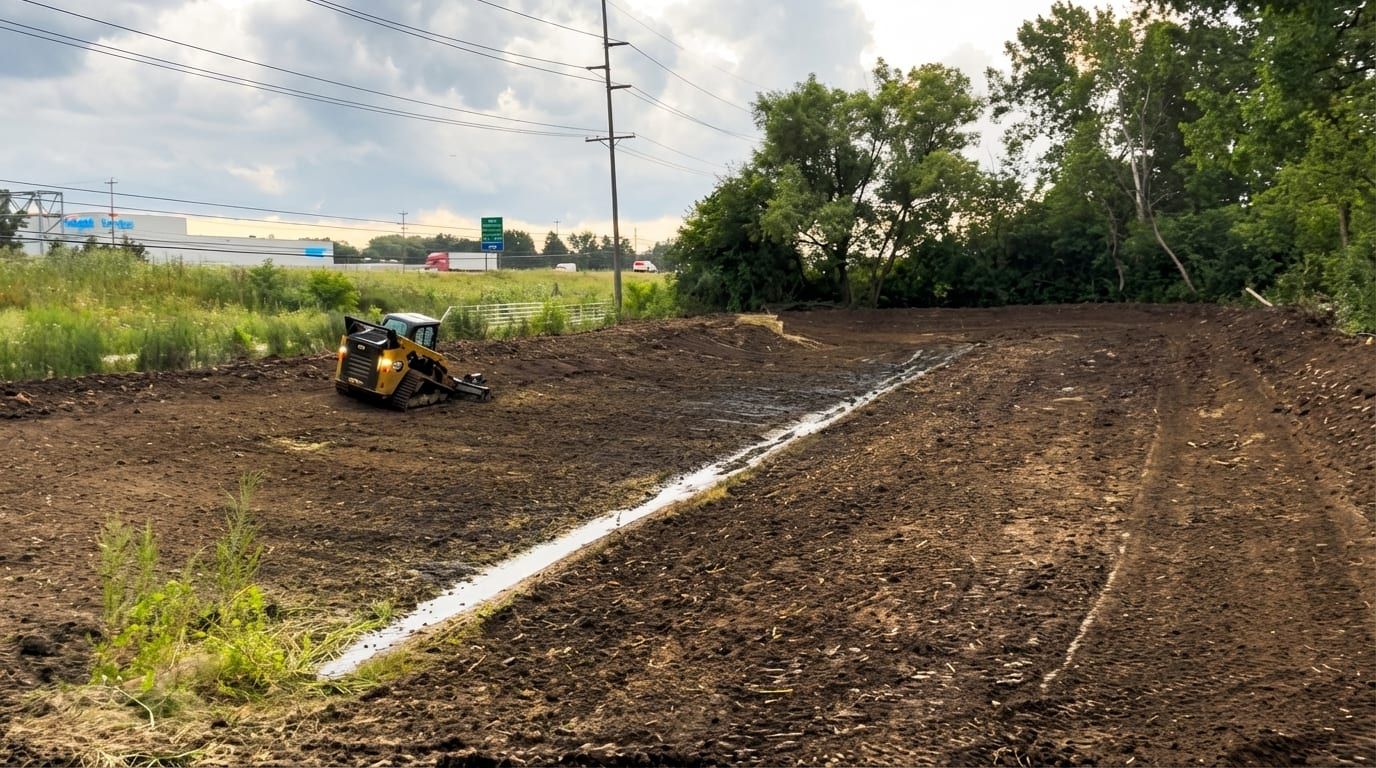
Augusta sits on the Savannah River floodplain, and its stormwater program reflects that.
Augusta-Richmond County holds its own NPDES MS4 permit from the Georgia Environmental Protection Division (EPD), and the Augusta Engineering Department runs both the county's Stormwater Utility and its Soil Erosion and Sediment Control Ordinance. That's two separate obligations for property owners. The Stormwater Utility funds and maintains the public drainage network, while the erosion control ordinance governs what happens on private sites during and after land disturbance.
Property owners with engineered stormwater systems in Augusta are typically responsible for:
- Keeping BMPs functional, including retention ponds, detention basins, and bioretention cells, so they perform to their original design
- Land disturbance permitting for any qualifying site work, with SWPPP documentation aligned to GSWCC Level IA/IB standards
- Sediment and erosion control during construction, consistent with the state's Manual for Erosion and Sediment Control in Georgia
- Responding to Engineering Department inspection findings before a deficiency turns into a bigger repair or a compliance problem
What makes Augusta different from a lot of Southeast cities is geography, not just growth. The city sits directly on the Savannah River and its floodplain, with much of the surrounding land flat and low along tributary creeks. The Engineering Department has quantified what it manages: 731 miles of ditches, 568 miles of storm drains, more than 12,600 catch basins, and nearly 1,000 flood detention ponds spread across roughly 329 square miles. Extended moderate rainfall, or one intense short-duration storm, can push that system past capacity. Three upstream reservoirs on the Savannah River add another variable to how the river itself responds downstream at Augusta.
Augusta also sits on the fall line, the geological hinge between the Piedmont and the Coastal Plain. That means the soil under a given property can be dense Piedmont red clay, looser Coastal Plain sand, or somewhere in the transition between the two, and each drains and erodes differently. A BMP or grading plan that assumes the wrong soil behavior is a BMP that fails its next inspection.
AUE Land works within Georgia EPD's regulatory framework and GSWCC's certification standards. We mobilize crews and equipment for project-based work in Augusta and the wider Central Savannah River Area, scheduled around your inspection window or compliance deadline rather than a walk-in service call.
What we do for Augusta properties.
Stormwater BMP Inspection & Maintenance
Annual inspections, sediment removal, outlet structure repair, vegetation management, and compliance documentation for retention ponds, detention basins, and bioretention systems across Augusta and Richmond County, aligned with the Augusta Engineering Department's Stormwater Utility program.
Erosion Control & Slope Stabilization
Pond bank restoration, slope repair, bioengineered stabilization, riprap installation, and native plantings. Augusta's fall-line soils split between dense Piedmont clay and looser Coastal Plain sand, and each erodes differently once turf or tree cover is disrupted.
Grading & Drainage Correction
Swale reshaping, ditch regrading, site drainage redirection, and low-area correction for properties where settling, development, or aging infrastructure has broken the original drainage design.
Storm Drainage Infrastructure
Catch basin repair, storm pipe replacement, outfall rehabilitation, and system cleaning. Augusta's drainage network runs hundreds of miles of ditches and storm drains, and private-side connections into that network need the same upkeep as the public system.
Stormwater Compliance
SWPPP support, GSWCC Level IA/IB-aligned documentation, and inspection prep for properties navigating Augusta's Soil Erosion and Sediment Control Ordinance and Georgia EPD's General Permit requirements for land-disturbing activity.
Emergency Repair
Post-storm washout repair, slope failure response, outfall collapse stabilization, and emergency grading. When the Savannah River basin gets hit with sustained rain, low-lying Augusta properties need a fast response, not a multi-week wait.
Properties we serve in the Augusta area.
HOAs & Planned Communities
Subdivisions across Columbia County and west Augusta built detention ponds and BMPs during the area's growth years, and many are now old enough to need real rehabilitation rather than mowing. We build maintenance programs that keep boards ahead of Engineering Department inspections instead of reacting to a notice of violation.
Commercial Properties
Retail, office, and industrial sites throughout Augusta, including properties near Fort Eisenhower and the Augusta National corridor, carry the same BMP maintenance obligations as residential communities under Georgia EPD's stormwater framework. We handle inspections, repairs, and the documentation property managers need on file.
Developers & Contractors
Active construction in Augusta and Columbia County needs a Georgia land disturbance permit, GSWCC-aligned SWPPP documentation, and erosion control that holds up to Engineering Department inspection. We perform the grading, BMP installation, and erosion control work that keeps a land disturbance permit in good standing through closeout.
Municipal & Institutional
Augusta-Richmond County's consolidated government maintains a stormwater network that's large by any measure: hundreds of miles of ditches and storm drains, thousands of catch basins, and nearly 1,000 flood detention ponds. We provide equipment and crews for infrastructure rehabilitation and drainage projects that supplement municipal maintenance capacity.
Augusta needs a contractor who understands its regulatory structure, not just its rainfall.
Augusta-Richmond County's consolidated government runs its own MS4 permit, its own Stormwater Utility, and its own Soil Erosion and Sediment Control Ordinance on top of Georgia EPD and GSWCC requirements. That's a different stack from a coastal county with tidal buffers, and it's different again from a jurisdiction that leans entirely on the state general permit. A contractor who doesn't know the difference between Augusta's local ordinance and the state's baseline requirements will miss what an Engineering Department inspector is actually looking for.
AUE Land mobilizes crews and equipment into Augusta and the CSRA for project-based stormwater work. We plan the job around your inspection window or permit deadline, bring our own equipment, and document the work to the standard Georgia's regulatory framework expects.
Nearby areas we serve.
Fast-growing Augusta suburbs including Evans and Martinez
Aiken County, across the Savannah River
Aiken County commercial and residential growth
Coastal Georgia, roughly 2.5 hours southeast
Midlands South Carolina, roughly 1.5 hours east
Frequently Asked Questions
What stormwater regulations apply to properties in Augusta, GA? expand_more
Does Augusta require GSWCC certification for land-disturbing work? expand_more
Why does Augusta have more flooding risk than a typical inland city? expand_more
Who provides stormwater management services in Augusta, GA? expand_more
How does Augusta's soil differ from coastal Georgia, and why does that matter for drainage? expand_more
Ready for a site that thrives?
Request a site assessment and we'll evaluate your BMPs, drainage, and compliance status against Augusta and Georgia EPD requirements. No obligation to hire AUE Land for any service work.
fact_check Site Health Audit
No obligation to hire AUE Land for any service work.